Speak to an Expert Today!
714-639-3326
sales@decotechgroup.com
Headquarters
1040 Segovia Circle
Placentia, CA 92870

714-639-3326
sales@decotechgroup.com
1040 Segovia Circle
Placentia, CA 92870
Durable printing on glass is not simply a matter of choosing a UV ink. The glass type, factory coatings, surface preparation, ink chemistry, print process, UV cure and final adhesion testing all affect whether the decoration survives real production and end-use conditions.
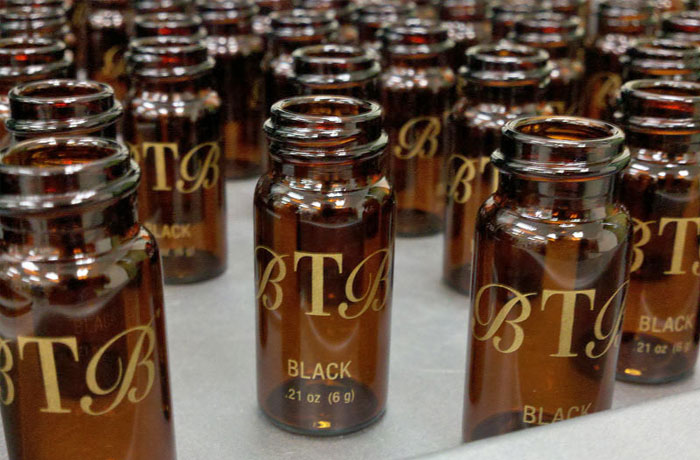
The best glass-printing process depends on the geometry, artwork, annual volume, color count, changeover frequency and required durability. For industrial production, UV screen printing is often an excellent choice when opacity, controlled ink deposit, fast curing and repeatability are priorities. Digital and pad printing can be better fits for other artwork and part geometries.
Glass is smooth and non-porous, so ink remains on the surface rather than penetrating it. Contamination, release agents, protective coatings and handling residue can all reduce adhesion. That is why the same ink can perform differently on two containers that appear visually identical.
Packaging glass may receive hot-end and/or cold-end treatments during manufacturing. These coatings improve scratch resistance and handling performance, but they can also affect printing adhesion. Before specifying an ink or pretreatment process, determine exactly what has been applied to the glass.
A durable printing process should be developed as a sequence. Proper surface preparation and final cure are just as important as the print itself.
Printcolor offers dedicated systems for both packaging glass and flat glass. This is important: a UV ink intended for a flat indoor glass panel is not automatically the right ink for a spirits bottle or reusable restaurant glass.
Printcolor Series 544 is a two-component UV screen printing ink developed specifically for round and packaging glass, including perfume bottles, cosmetic containers, spirits bottles and gastronomy drinkware.
Series 540 is a silky-gloss UV screen printing ink for indoor decoration of flat glass and metal. Typical applications include mirrors, glass furniture, gaming panels, cover plates and signs.
Series 632 is a silicone-free, two-component solvent-based screen printing ink developed for demanding glass, metal and plastic applications where adhesion, resistance and premium finish are important.
Inkcups heavily favors UV digital printing in its glass guide. Digital is excellent for the right application, but it is not automatically the best process for every glass product. A manufacturer should choose the process around production requirements—not the technology a supplier happens to sell.
| Method | Best suited for | Artwork | Production considerations | Typical glass applications |
|---|---|---|---|---|
| UV screen printing | Repeat production, controlled ink deposit and high opacity | Spot colors, fine lines, halftones, whites and supported special effects | Requires screens and setup; UV curing can be integrated inline for high-speed production | Bottles, jars, drinkware, perfume containers, cosmetic packaging and panels |
| UV digital printing | Full-color graphics, variable artwork and short SKU changeovers | CMYK images, gradients, personalization and variable data | No screens or clichés; glass pretreatment, ink compatibility and adhesion remain critical | Drinkware, personalized glass, cylindrical containers and decorative products |
| Pad printing | Small graphics on curved, recessed or irregular glass | Fine spot-color logos and markings | Requires cliché, silicone pad and fixture; smaller image area than cylindrical screen or digital | Logos, calibration marks, specialty components and small glass parts |
| Solvent screen printing | Applications requiring specialized bonding or resistance characteristics | Spot colors, functional layers and technical graphics | Drying / curing requirements depend on the exact 2C system and production specification | Flat glass, control panels, cover plates, decorative glass and technical components |
Modern screen printing can combine high opacity, controlled ink-film thickness, fast UV curing, premium color appearance and automated cylindrical handling. For repeat production, that combination can be more valuable than simply maximizing the number of printable colors.
Printing should be qualified after final cure, not immediately after the part exits the machine. The exact test plan should reflect how the finished product will be filled, packed, washed, cleaned and handled.
Glass printing spans packaging, consumer products, technical components and decorative surfaces. The process should be selected around the actual product rather than treating all glass as one substrate.
Yes. Printcolor offers dedicated UV screen printing systems for glass, including Series 544 for round and packaging glass and Series 540 for indoor flat glass. The final process still has to be qualified on the exact glass, coating, pretreatment and cure conditions.
For round and packaging glass, Printcolor Series 544 is specifically developed for applications such as perfume bottles, cosmetic containers, spirits bottles and gastronomy drinkware. The final ink choice should be confirmed against the glass coating, artwork, production speed and required resistance.
Series 540 is a UV screen printing ink for indoor flat-glass and metal applications. Series 632 is a silicone-free two-component solvent-based alternative for demanding flat-glass applications where high resistance, bonding or overprinting characteristics may be important.
It depends on the glass, factory coating and ink system. Cleaning is always important, and some applications benefit from flame, plasma, corona or another qualified pretreatment. Do not assume that two visually similar bottles have the same surface chemistry.
Neither is universally better. Screen printing is strong for opaque spot colors, repeat production and controlled ink deposit. Digital printing is strong for full-color imagery, variable data and frequent artwork changes. Volume, geometry, durability and artwork should determine the technology.
Common evaluations include tape adhesion, crosshatch testing, scratch or abrasion testing, dishwasher testing and application-specific chemical exposure. The final acceptance criteria should match the finished product's intended use.
Yes. Deco Tech supplies screen and pad printing equipment, Printcolor inks, surface-treatment systems, curing equipment, tooling and automation, and can help review the complete application before a production system is specified.
Deco Tech can review the glass type, ink system, pretreatment, printing method, curing requirement and equipment configuration before you commit to a production process.