
Engineered Squeegees for Repeatable Screen Printing
RKS stabilized squeegee systems are built to hold geometry, printing angle and edge condition more consistently through demanding production runs. Deco Tech supplies RKS blades for industrial flatbed, container, rotary and precision screen printing applications throughout North America.
The 2026 range is led by the new RKS Carbon BW, alongside Carbon S, the proven RKS System family, rotary blades and conventional RKS HT1 and Printan materials.
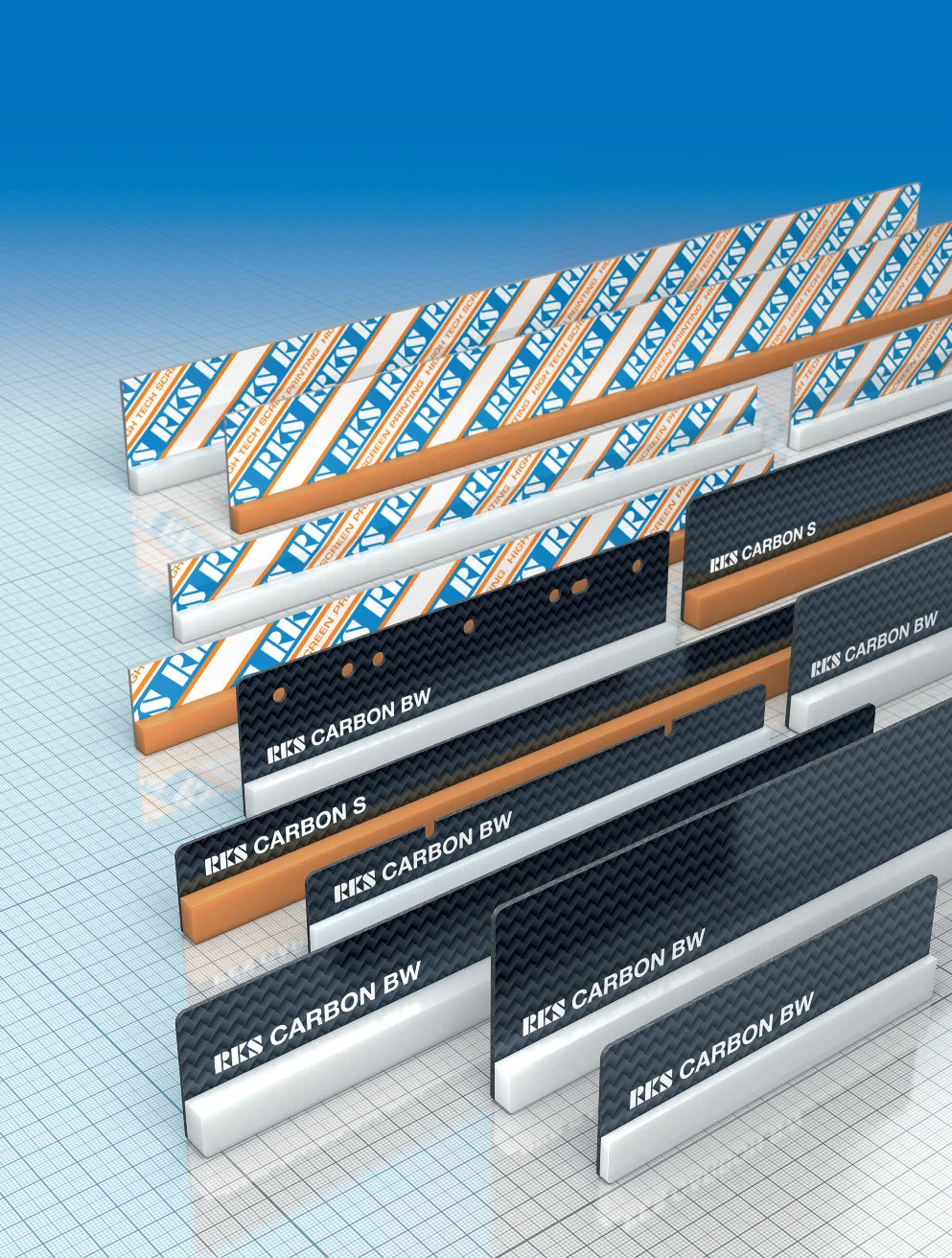
Which RKS Squeegee Fits Your Process?
Instead of choosing a blade by durometer alone, start with the print process and the behavior you need from the carrier and printing edge.
Fine Lines & High-Speed Serial Printing
Choose Carbon BW when process repeatability, stable geometry, very fine detail and controlled deposit are the priority.
Explore Carbon BW 02Flexible Flatbed Printing & Static Control
Carbon S combines a carbon carrier with original Vulkollan® quality for flexibility, chemical resistance and potential static reduction.
Explore Carbon S 03Standardized Industrial Screen Printing
The RKS System uses a fiberglass-reinforced carrier to keep the printing edge plane-parallel and the process repeatable.
Explore RKS System 04Rotary, Narrow-Web & Specialty Applications
RKS also manufactures rotary RS families, HT1 polyurethane and Printan blades for specialized screen printing requirements.
See Specialty Options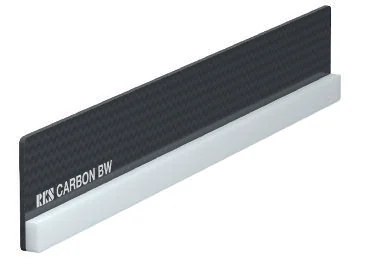
Built to Hold Its Edge, Angle & Print Quality
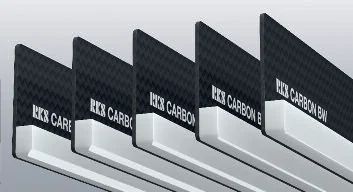
Carbon BW is a multi-component hybrid blade with a next-generation carbon carrier and an RKS HT printing edge that is thermally moulded into the blade rather than glued. RKS supplies it with a defined, plane-parallel, pre-ground edge so it arrives ready for printing.
- Stable print angle: designed to resist angle change caused by solvent or monomer absorption during production.
- Fine-line capability: RKS specifies line fineness below 30 µm, depending on the selected carrier, hardness and chamfer.
- High deposit capability: configurations can also be selected for high layer thickness with strong homogeneity.
- Antistatic option: available from 1.7 mm carrier thickness with special grinding and machine grounding.
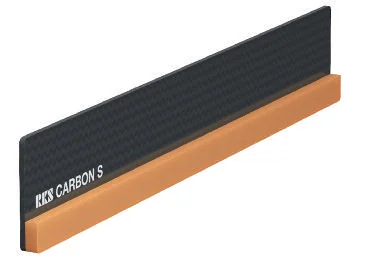
More Flexibility with Strong Chemical Resistance
RKS Carbon S uses original Vulkollan® quality produced without added softeners, giving the printing edge strong chemical and abrasion resistance. The carbon carrier improves bending elasticity and recovery stability, which allows RKS to produce thinner, more flexible stabilized blades.
- Flatbed screen printing: RKS specifically positions Carbon S as a strong fit for flatbed presses.
- Static behavior: under suitable conditions the carbon structure can help reduce or divert static build-up during printing.
- Flexible stabilized construction: useful when the conventional RKS System feels too rigid for the process.
- Chemical and abrasion resistance: supported by the Vulkollan® printing-edge material.
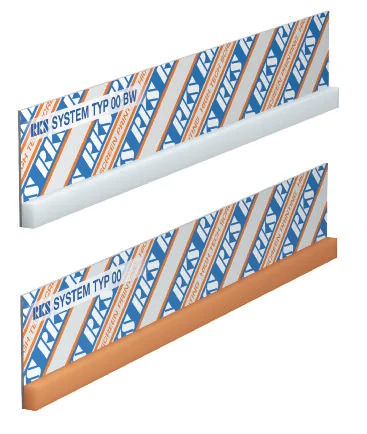
A Plane-Parallel Edge for Standardized Production
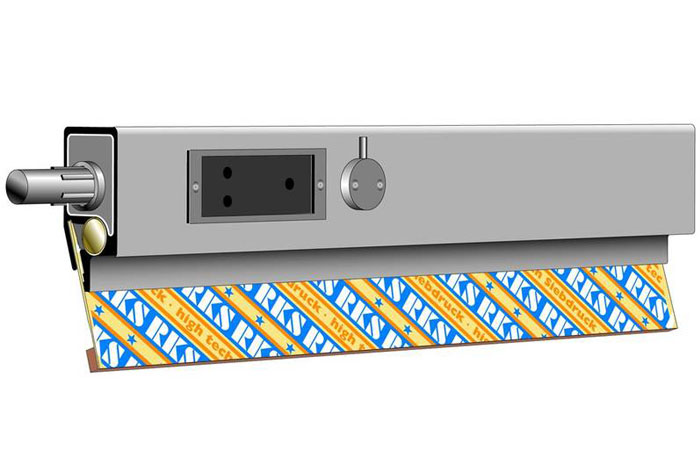
The original RKS System combines a fiberglass-reinforced carrier with an elastomer printing edge. The rigid carrier is designed to retain its form and keep the edge parallel to the printing plane instead of allowing the blade geometry to shift unpredictably during a run.
- Type 00 / 00 BW: continuous carrier thickness of approximately 1.7 or 2.5 mm.
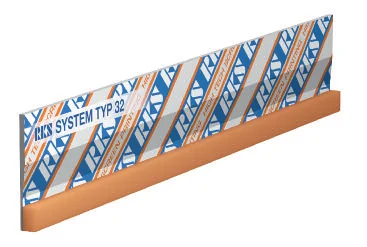
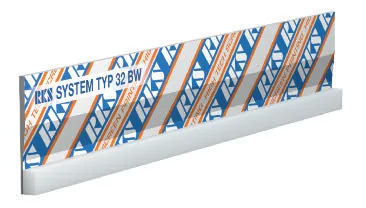
- Type 32 / 32 BW: graded carrier geometry from approximately 2.5 mm to 1.4 mm for a different flex characteristic.
- Broad hardness selection: 55°, 65°, 70°, 75° and 80° Shore depending on the configuration.
- Production lengths: typically selectable from 100 to 2800 mm, with Type 32 BW listed to 2600 mm.
Carbon BW vs. Carbon S vs. RKS System
The three stabilized families share the goal of repeatable screen printing, but the carrier construction and printing-edge materials give each family a different operating window.
| Specification | Carbon BW New | Carbon S | RKS System |
|---|---|---|---|
| Carrier concept | Next-generation carbon hybrid | Carbon-fiber stabilized carrier | Fiberglass-reinforced carrier |
| Printing edge | Pre-ground RKS HT material, thermally moulded | Original Vulkollan® quality | Elastomer edge bonded to GRP carrier |
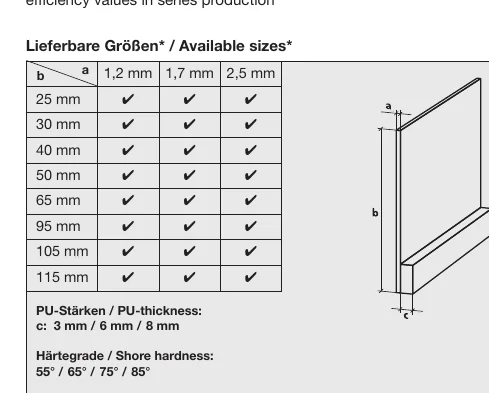
| Carrier thickness | 1.2 / 1.7 / 2.5 mm | 1.2 / 1.7 / 2.5 mm | 1.7 / 2.5 mm Type 00; graded 2.5 → 1.4 mm Type 32 |
| PU thickness | 3 / 6 / 8 mm | 3 / 6 / 8 mm | 6 / 8 mm |
| Shore hardness | 55° / 65° / 75° / 85° | 55° / 65° / 75° / 85° | 55° / 65° / 70° / 75° / 80° |
| Typical fit | Fine detail, controlled deposit, high-speed serial production | Flexible flatbed work, chemical resistance, static-sensitive conditions | Standardized industrial screen printing with proven GRP stability |
| Max. listed length | Approx. 2800 mm | Approx. 2800 mm | Up to 2800 mm depending on type |
The Carrier Is What Changes the Process
A conventional unsupported polyurethane blade can change shape as pressure, heat and solvents affect the material. RKS stabilizes the printing edge with a carbon- or fiberglass-reinforced carrier so flex, edge alignment and print angle can be controlled more predictably.
Send Us Your Print ParametersSpecialty RKS Squeegee Families
The 2026 RKS catalog also covers dedicated rotary blades and conventional polyurethane materials for applications that do not require the same stabilized flatbed geometry.
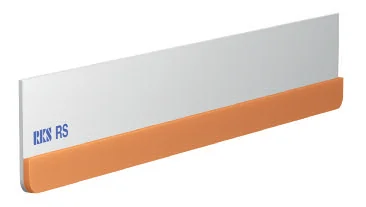
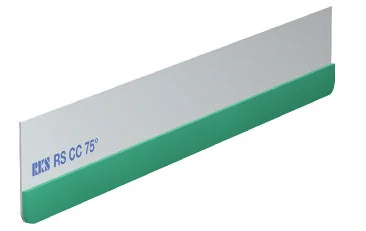
RKS Rotary RS / RS CC
Dedicated rotary blades for narrow-web and high-end industrial rotary screen printing. RS CC adds a color-coded RKS HT edge for easy Shore identification.
Ask about rotary blades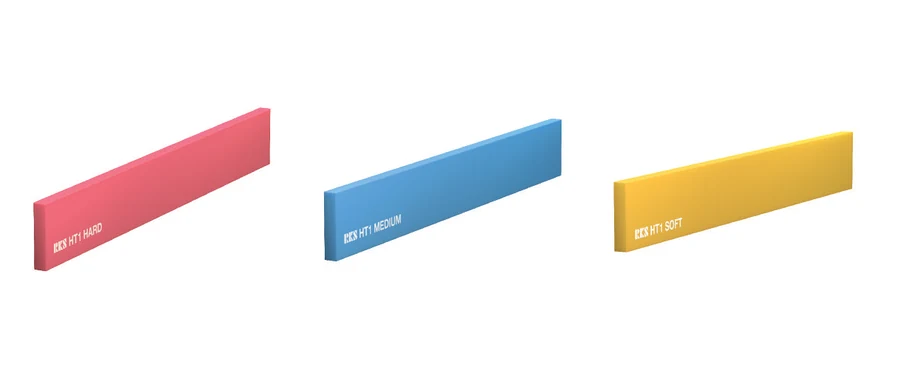
RKS HT1
Modified polyurethane developed for demanding UV and solvent-ink service, with strong swelling, abrasion, wear and heat resistance. Offered in 65°, 75° and 85° Shore.
Ask about RKS HT1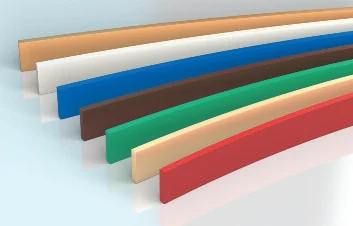
RKS Printan
Universal color-coded squeegee material available in common dimensions, hardnesses and profiles, including Monoflex, Biflex and Triflex configurations.
Ask about PrintanWhat We Need to Specify Your RKS Blade
RKS produces many combinations of height, carrier thickness, PU thickness, Shore hardness and edge geometry. Send Deco Tech the details below and we can narrow the configuration before quoting.
Related Screen Printing Resources
Common Questions
What is different about an RKS stabilized squeegee?
Instead of relying on unsupported polyurethane for the full blade body, stabilized RKS families use a reinforced carrier joined to the printing edge. The carrier is designed to keep the blade geometry and edge alignment more consistent during the print stroke and across production runs.
Which RKS blade is intended for the finest line work?
RKS states that Carbon BW can support line fineness below 30 µm depending on the selected carrier, hardness and chamfer. Final blade selection still depends on the mesh, stencil, ink or paste, press setup and required deposit.
Can Carbon S help with static during screen printing?
RKS states that, under certain production conditions, the carbon structure in Carbon S can reduce or divert static build-up during the print run. The overall machine setup and grounding still matter.
What sizes are available?
The stabilized families include multiple standard blade heights and carrier thicknesses, with production lengths reaching approximately 2800 mm on many configurations. RKS also notes that additional dimensions can be produced on request.
Does Deco Tech supply conventional polyurethane squeegee material too?
Yes. In addition to RKS HT1 and Printan materials, Deco Tech also offers Pleiger polyurethane squeegee blades for customers who need a conventional unsupported blade rather than a stabilized RKS system.
Specify the Blade Around the Print Process.
Tell us what you are printing, your press type, ink system, blade dimensions and the result you need. Deco Tech can help narrow the RKS configuration for your application.
RKS System Screen Printing Squeegees

RKS Carbon-S Screen Printing Squeegees
Need High-Performance RKS Squeegee Blades for Your Screen Printing Operations?
Call 714-639-DECO or email sales@decotechgroup.com to order custom squeegees or get expert recommendations based on your substrate and ink requirements.
RKS System Screen Printing Squeegees