Speak to an Expert Today!

714-639-3326
sales@decotechgroup.com

Headquarters

1040 Segovia Circle
Placentia, CA 92870

Printcolor Inks - Durable Marine Graphic Coatings for Sail Cloth

Swiss-made systems for sail lofts and marine textile shops

Sailcloth Coatings & Flexible Sail Printing Inks

Printcolor Series 460 gives sailmakers a water-based system for adding color and clear protection to polyester and composite sails. For nylon, polyamide and other flexible synthetic fabrics, Series 660 is made for screen printing. The sailcloth itself determines which system makes sense.
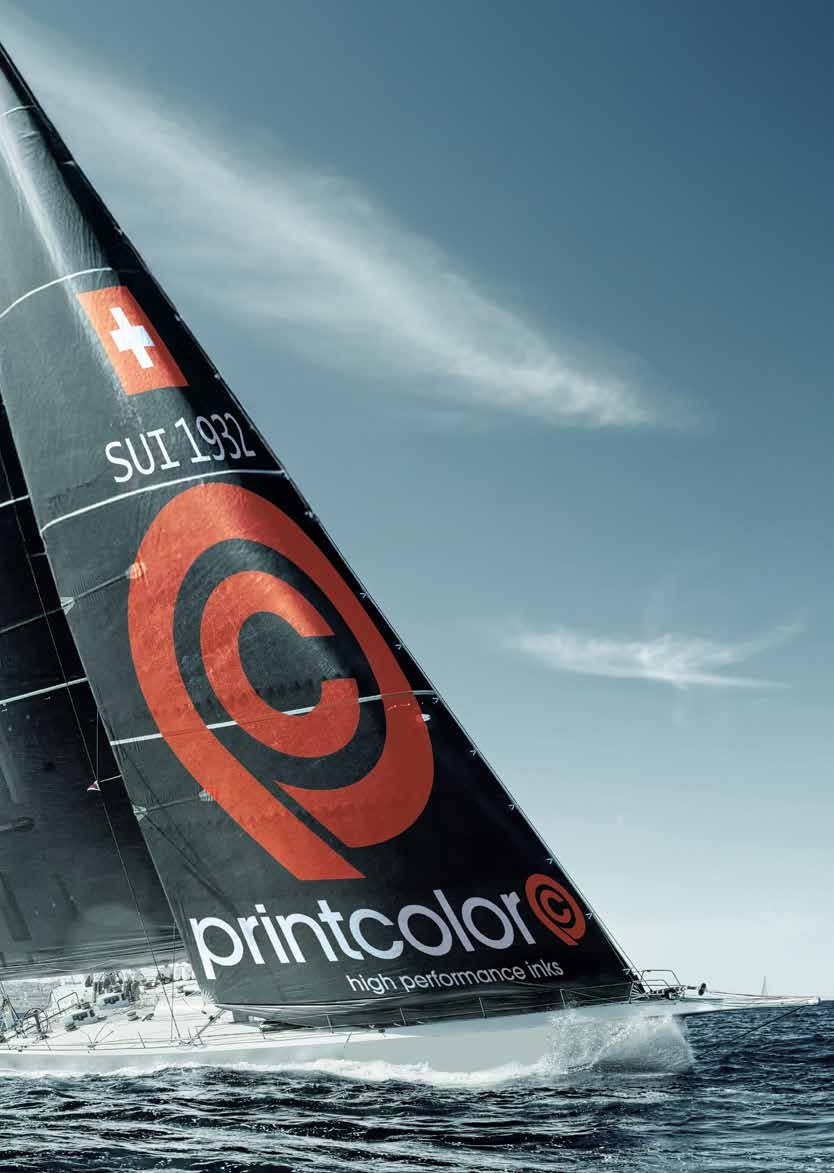
Racing sail decorated with Printcolor sailcloth coating
Polyester & composite sailsStart with Series 460 sailART and sailGUARD coatings.
Nylon & polyamide sailsStart with flexible Series 660 screen printing ink.
Test the exact sailclothConstruction, finish, prior treatment and cure conditions all matter.

Choose by sail material

What is the sail made from?

A woven polyester mainsail, a composite racing sail and a nylon spinnaker are three very different surfaces. Start with the material, then test the coating or ink on an offcut from the actual sail before going into production.

Series 460 starting point

Woven polyester & composite sail materials

For polyester sailcloth, composite constructions, sacrificial UV strips, sail covers and marine canopies.

  • Colored logos, numbers and sail graphics
  • Transparent gloss or matte protection
  • Applied by rolling, brushing or spraying
  • Water-based two-component coating system
Review Series 460 →
Series 660 starting point

Nylon, polyamide & other synthetic fabrics

For nylon sailcloth, polyamide spinnakers and other flexible synthetic fabrics that will be screen printed.

  • Highly flexible, silky-gloss ink film
  • Available as a one- or two-component system
  • Standard and custom-matched colors
  • Applied by screen printing
Review Series 660 →

Important: "Dacron" is commonly used for woven polyester sailcloth, but coatings and surface finishes vary by manufacturer. Molded composites, film laminates and woven fabrics should be treated as separate materials. Send a representative offcut whenever the construction or finish is proprietary.

Printcolor sail coating systems

Color, clear protection and flexible screen printing for sailcloth.

sailARTeco adds color to polyester and composite sailcloth. sailGUARDeco adds a clear gloss or matte protective finish. Series 660 is the flexible screen printing ink for nylon, polyamide and other synthetic fabrics.

Series 460 - colored coating

sailARTeco

A water-based, two-component color system for branding and decoration on polyester and composite sail materials. The satin-matte coating is mixed from 11 mono-pigmented base colors.

ApplicationRolling, brushing or spraying
HardenerSeries 460-HDA at 10% by weight
Usable time after mixingApproximately 2 to 3 hours
Typical useLogos, sail numbers, identifiers and custom color areas
Open Series 460 technical data sheet →
Series 460 - transparent varnish

sailGUARDeco

A transparent, ultra-flexible varnish used by itself or over sailART. Choose Series 460-5700 for gloss or 460-5700/MT for a matte finish.

ApplicationRolling, brushing or spraying
HardenerSeries 460-HDA at 10% by weight
Touch dryApproximately 2 to 3 hours, depending on coating thickness
Full cure5 to 7 days at about 20°C for maximum resistance
Open the sail coating brochure →
Flexible screen printing ink

Printcolor Series 660

A highly flexible, solvent-based screen printing ink for synthetic fabrics. It is available as a one- or two-component system and is commonly evaluated for nylon and polyamide sails.
ApplicationScreen printing with commercially available polyester mesh
Outdoor hardenerSeries 600-HDA at a 10:1 ink-to-hardener ratio
Usable time after mixingApproximately 4 to 8 hours, depending on conditions
FinishSilky gloss with high flexibility
Open Series 660 technical data sheet →
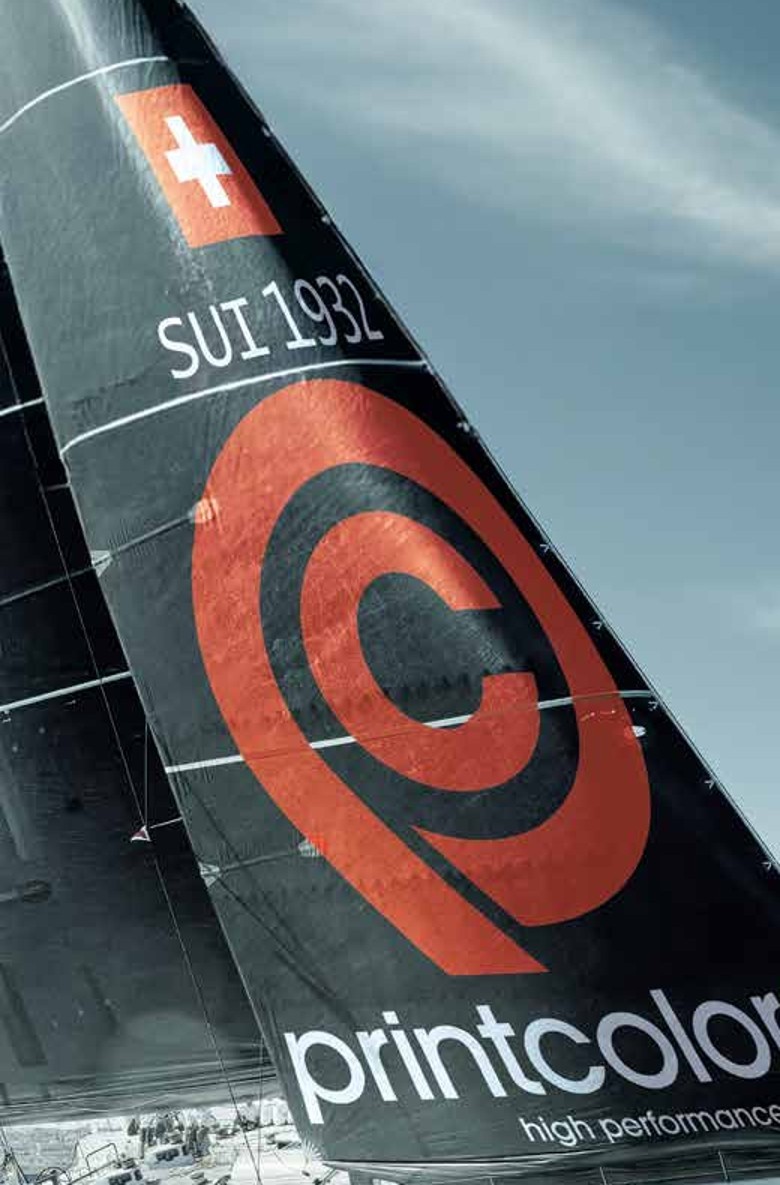
Close view of a decorated composite racing sail under load
A sail coating is judged after the sail is handled and loaded.Flat-panel adhesion is only the first check.

Why sail-specific chemistry matters

Sailcloth takes a beating. The coating has to keep up.

A sailcloth coating has to deal with constant flexing, folding, UV exposure and weather without becoming the weak point of the sail. Printcolor developed its sail coating systems for the demands that come with real-world use.

Folding & creasingRepeated folding exposes a rigid coating fast. The finish needs to flex without cracking, whitening or lifting at the edges.
Chafe & abrasionBattens, seams and contact points rub. The coating needs enough toughness to resist premature wear.
Weather exposureSun, moisture and outdoor exposure all work against the finish. Color and adhesion have to hold up after the sail leaves the loft.
Seams & masking edgesClean coverage matters around stitching, seams and tape lines. The coating should stay where it belongs without bleeding through.

Application methods

There’s more than one way to decorate sailcloth.

Series 460 can be rolled, brushed or sprayed. Series 660 is screen printed. Coating thickness, viscosity, drying and cure must be set around the selected method and the actual sail material.

01

Rolling

Useful for controlled coverage over larger areas when the roller, overlap and wet coating thickness are standardized.

Series 460
02

Brushing

Suitable for detail work and smaller areas after brush marks, edge definition and coating thickness are approved.

Series 460
03

Spraying

Useful for even coverage when the spray setup, thinning, overspray control and ventilation are established.

Series 460
04

Screen printing

Used for Series 660 on flexible synthetic fabrics. Mesh, stencil, deposit and drying conditions must be tested together.

Series 660

Process control

Dry to the touch does not mean ready for service.

Both systems continue curing after they feel dry. Give the coating or ink its full cure time before the sail is folded, stacked or put into service. Temperature and humidity matter, especially during the first part of the cure.

01

Identify the exact cloth

Record the sailcloth manufacturer, material code, fiber or composite construction, finish and any previous treatment.

02

Prepare a real offcut

Use the same cleaning, masking, seams, stitching and surface condition that will be present in production.

03

Measure the mix

Weigh hardener and auxiliaries accurately. Mix only what can be used within the stated pot life.

04

Control the application

Document the roller, brush, spray setup or screen mesh along with coating thickness and number of passes.

05

Hold the cure conditions

Maintain the required temperature, especially during the first 48 hours, and prevent excess humidity during drying.

06

Test before full production

Check adhesion, fold and crease behavior, abrasion, water exposure, appearance and the sail's intended service conditions.

Series 460 color system

Mix repeatable sail graphics from 11 base colors.

The sailART base colors are mono-pigmented and designed to be mixed without exceeding the recommended pigment level. Deco Tech can also review custom colors and provide standard mixing recipes when available.

Sun Yellow460-1100
Sunset Orange460-2000
Volcano Red460-2500
Signal Red460-3000
Deep Crimson460-3300
Tviolet460-4000
Marina Blue460-5000
Goa Green460-6000
Teak Brown460-7000
Anchor Black460-8000
Arctic White460-9000
Racing White460-9100

Screen colors are only a visual guide. Approve the mixed coating on the actual sail material because cloth color, texture, coating thickness and finish can change the final appearance.

Application approval

Send the sail material before committing to production.

A useful review starts with a representative offcut and a clear description of the job. The goal is to narrow the product system and define a test plan, not to assume that every polyester, composite or nylon sail will behave the same way.

1
Material identificationManufacturer, product code, fiber or composite construction, finish and prior treatment.
2
Graphic requirementsArtwork, color, coverage area, opacity, edge detail and whether clear protection is required.
3
Production methodRoll, brush, spray or screen print, plus available drying space and temperature control.
4
Service conditionsRacing, cruising or offshore use; folding and storage; cleaning; chafe; moisture and weather exposure.
Printcolor laboratory developing and testing specialty coatings

Current technical documents

Use the latest data sheet for the exact product.

Processing details can change. Confirm the current technical data sheet and safety data sheet for the color, varnish, hardener, thinner or retarder being used.

Technical data sheetSeries 460 sailART & sailGUARDWater-based two-component coatings for polyester and composite sail fabrics.Open PDF →
Technical data sheetSeries 660 flexible screen printing inkSolvent-based one- and two-component ink for synthetic fabrics and other flexible materials.Open PDF →
Related product guidePrintcolor sail coating brochureProduct overview for Series 460 and Series 660 sail decoration systems.Open brochure →

Sailcloth coating FAQ

Common questions from sail lofts and marine textile shops.

What coating should I use on woven polyester or Dacron sailcloth?
Series 460 sailART and sailGUARD are the starting systems for polyester sail fabrics and composite sail materials. The exact woven finish, resin, laminate or surface treatment must still be tested on a representative offcut.
What ink should I use for a nylon spinnaker?
Series 660 is the starting point for screen printing on nylon, polyamide and other flexible synthetic fabrics. Confirm adhesion, flexibility, drying and color on the exact spinnaker cloth before printing a finished sail.
What is the difference between sailART and sailGUARD?
sailART is the colored decoration system. sailGUARD is a transparent gloss or matte protective varnish that can be used by itself or over sailART. Both are part of the water-based Series 460 two-component system.
Can I use ordinary paint or generic sail paint?
A generic paint may adhere to a flat sample but crack, transfer or lift after folding, flexing and weather exposure. Use a system intended for flexible sail materials and approve the complete process on the actual cloth.
How long must the coating cure before the sail is folded or used?
Series 460 sailGUARD reaches maximum resistance after about 5 to 7 days at approximately 20°C, with temperatures maintained during the first 48 hours. Series 660 generally needs 5 to 10 days depending on the hardener and temperature. Follow the current data sheet and your approved test schedule.
Can Series 460 be used on molded composite or carbon-reinforced sails?
Series 460 is designed for polyester and composite sail materials, but proprietary molded and carbon-reinforced constructions can have very different surface films and finishes. Do not approve the system from the construction name alone. Send an offcut for testing.
Can Deco Tech match a team, sponsor or brand color?
Yes. Deco Tech can review Pantone references, physical color standards or customer samples. Final approval should be made on the production sail material because the background color and texture affect the result.

Start with an offcut from the actual sail.

Send the sailcloth details, artwork and intended application method. Deco Tech will help identify the appropriate starting system and the tests needed before full production.

Sailcloth manufacturer and codeFiber, film or composite constructionArtwork, color and coverageRoll, brush, spray or screen printRacing, cruising or offshore useRepresentative material offcut