Speak to an Expert Today!
714-639-3326
sales@decotechgroup.com
Headquarters
1040 Segovia Circle
Placentia, CA 92870

714-639-3326
sales@decotechgroup.com
1040 Segovia Circle
Placentia, CA 92870
Printcolor Series 711, 747 and 752 include specific black and white USP Class VI certified pad printing inks for medical devices. Series 786 adds a highly resistant two-component medical-grade pad printing ink platform whose complete 14-color MS base set was represented in a NAMSA USP Class VI test composite, expanding custom color options for medical device printing and marking applications.
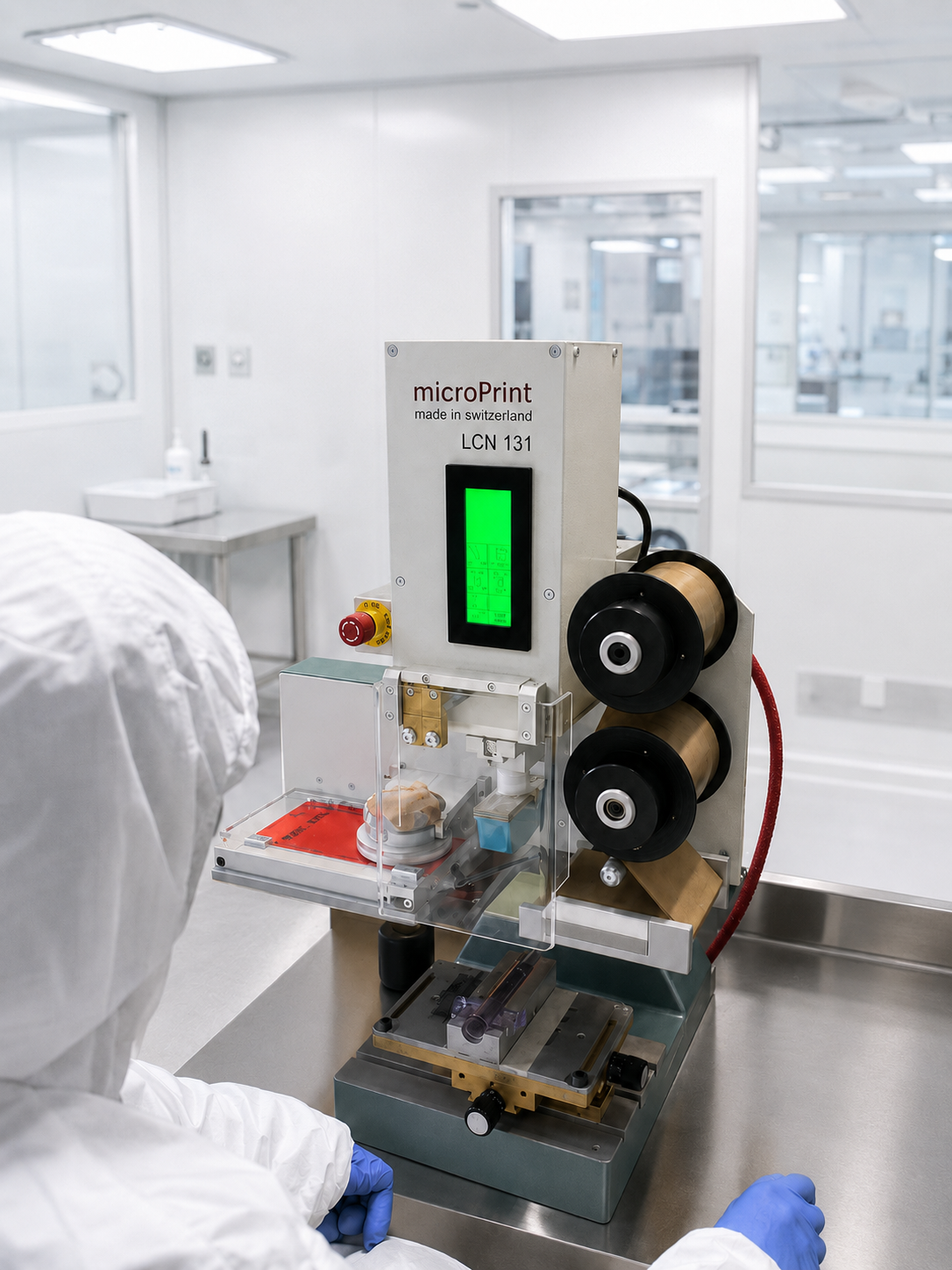
“Medical-grade pad printing ink” is a common industry and search term, but the important qualification is the certification or test documentation attached to the specific ink formulation. Printcolor's medical /USP black and white formulations in Series 711, 747 and 752 have been evaluated under the USP Class VI biological-reactivity framework. Series 786 is documented differently: NAMSA tested a composite formulation containing equal parts of all 14 Series 786 MS base colors, and the tested composite met USP Class VI requirements under the documented test conditions.
USP General Chapter <88> describes in-vivo biological-reactivity testing that includes systemic injection, intracutaneous and implantation testing. These are the biological-reactivity evaluations buyers commonly mean when searching for a biocompatible pad printing ink or USP Class VI medical ink. Printcolor's medical portfolio includes certified /USP formulations as well as the Series 786 NAMSA-tested MS color system. Final device compliance and validation remain the responsibility of the medical-device manufacturer.
Printcolor identifies medical-device Classes II and III, invasive or implantable-device components, and products requiring sterilization or chemical resistance among the applications where Class VI qualification can matter. Final acceptance still depends on the finished device, substrate, pretreatment, curing conditions and the manufacturer's validation protocol.
A Class VI certificate answers an important biocompatibility question about the tested formulation. It does not tell you whether the ink will adhere to your exact resin, survive your cleaning chemistry, tolerate your sterilization cycle or cure correctly on your production line. That is why this page also compares ink chemistry, substrates, documentation and application requirements.
Series 711, 747 and 752 provide specific black and white /USP formulations with different processing characteristics. Series 786 adds a separate two-component MS mixing-color platform for medical applications requiring broader custom color capability. Compare chemistry, curing, substrates, sterilization exposure and resistance requirements before application testing.
Series 711 is Printcolor's fast-drying, high-opacity one-component pad printing system. For medical applications, 711-8005/USP Black and 711-9005/USP White are the specific USP Class VI certified formulations. Printcolor lists plastics, glass and metal among compatible substrate groups.
Series 747 is Printcolor's UV-curable pad printing system for applications where rapid curing, cleanroom production or wet-on-wet multicolor printing is important. The certified medical formulations are 747-8005/USP Black and 747-9005/USP White.
Series 752 can be processed as a one- or two-component system and is intended for demanding applications on plastics and metals. Printcolor highlights strong chemical resistance and suitability for aggressive sterilization processes. The certified medical formulations are 752-8005/USP Black and 752-9005/USP White.
Compare substrate families identified for Series 711, 747, 752 and 786, including medical printing ink options for polypropylene (PP), polyethylene (PE), polycarbonate (PC), ABS, PMMA/acrylic, PVC, polyamide/nylon, metals and coated surfaces. Always confirm adhesion and resistance on the exact resin, surface condition, pretreatment and production process.
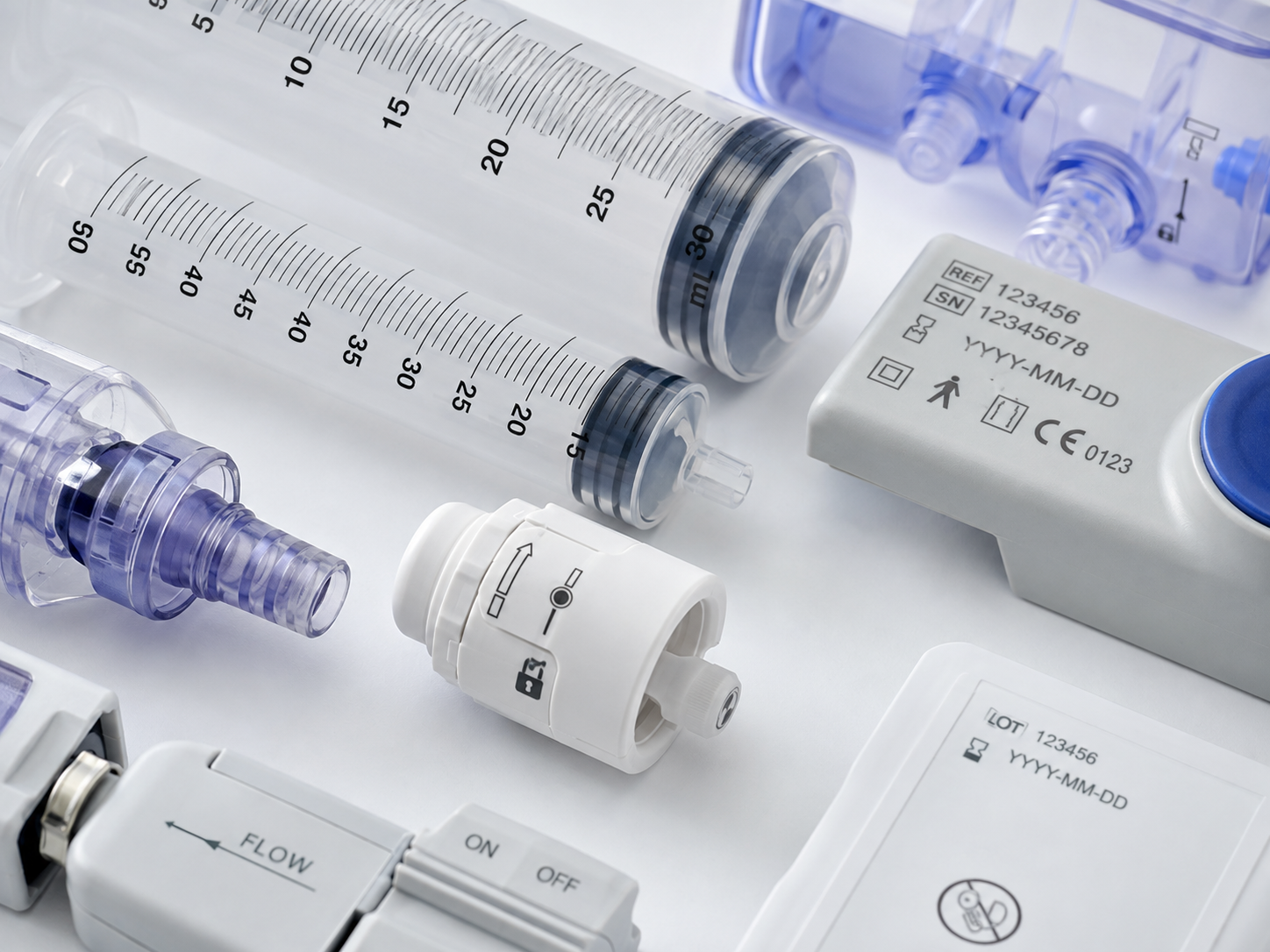
The Class VI certificate applies to the tested ink formulation. Medical-device performance can still change with the exact resin, molding additives, surface energy, pretreatment, ink-film thickness, cure, cleaning chemistry and sterilization process.
Printcolor identifies six commonly used medical formulations across Series 711, 747 and 752. The certification is tied to these specific black and white /USP products. Standard mixing colors, Pantone matches and other custom shades should only be represented as Class VI certified when supported by their own applicable documentation.
Series 786 expands Printcolor's medical ink offering beyond the specific black and white /USP formulations. NAMSA tested a printed and cured composite containing equal parts of all 14 Series 786 MS base colors, and the tested composite met USP Plastic Class VI requirements under the documented test conditions. This gives Deco Tech a documented MS base-color platform for custom color medical ink development while preserving the qualification tied to the actual test formulation.
Because the successful test composite represented the complete Series 786 MS base-color palette, Deco Tech can formulate Pantone®, corporate and product-specific custom colors using those same MS components. This is especially useful when a medical device marking ink must combine exact color matching with high chemical resistance, mechanical durability and documented Class VI test information.
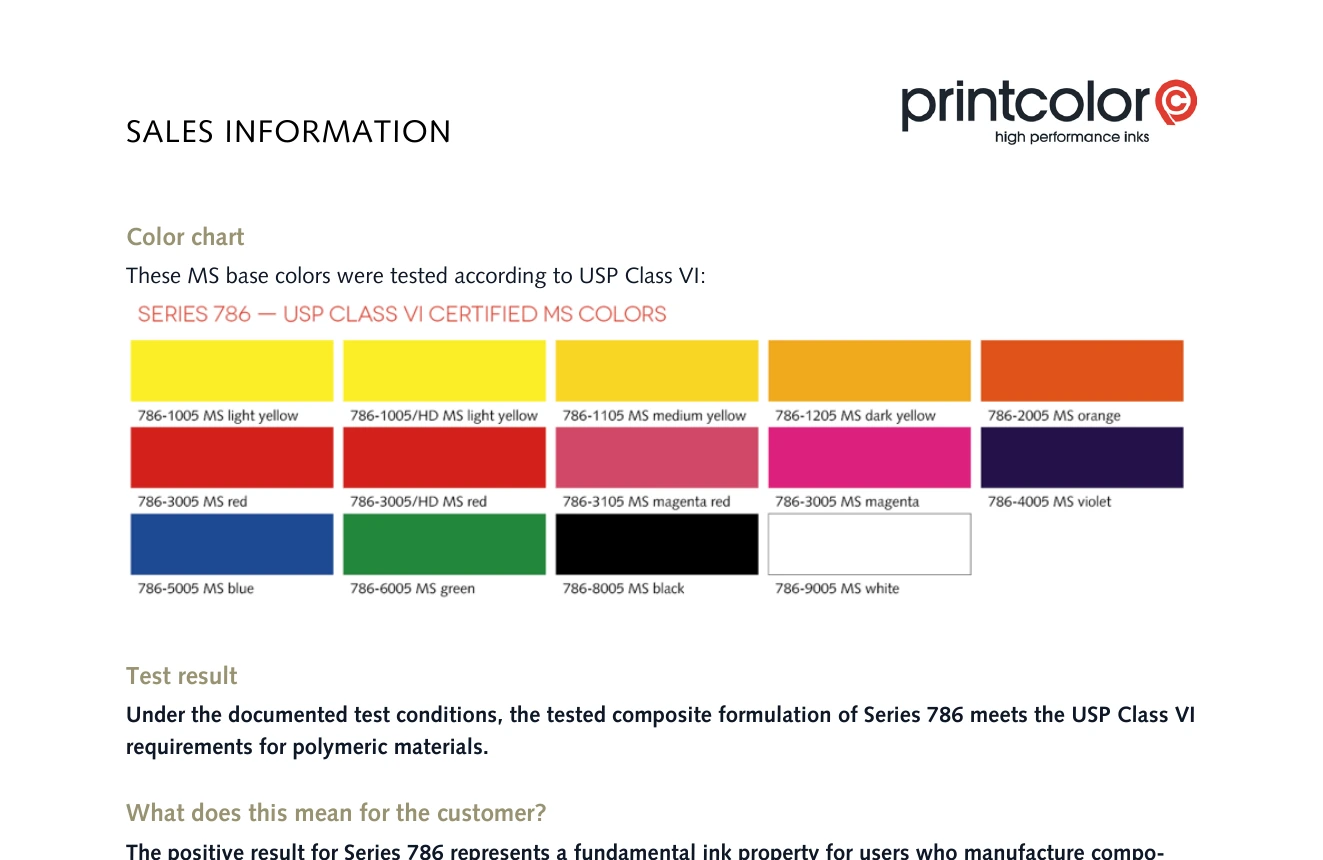
Engineering, quality and regulatory teams evaluating USP Class VI pad printing ink typically need the applicable certificate or test report, technical data sheet and safety data sheet. The 711, 747 and 752 sections link to their available /USP documentation. For Series 786, Deco Tech can provide Printcolor product information, sales information and the NAMSA test certificate supporting the tested MS color system.
Confirms the applicable /USP formulation and the biological-reactivity certification associated with that product.
Use the TDS for substrate guidance, processing parameters, auxiliaries, drying or curing, and resistance information.
Use the current SDS for handling, storage, hazard and workplace-safety information for the supplied ink and auxiliaries.
Medical device printing ink and medical device marking ink may be used for graduations, permanent legends, identification, symbols and branding on syringes, catheters, tubing, diagnostic housings, inhalers, labware and surgical components. Ink selection should account for substrate adhesion, cleaning chemistry, sterilization resistance and the required biocompatibility documentation.
Send us the substrate or resin, surface treatment, curing method, sterilization or cleaning exposure, number of colors and production volume. Deco Tech can help narrow the appropriate Printcolor system before application testing begins.
These are the questions manufacturing, quality and engineering teams most often need answered when evaluating a medical-device pad printing ink.
It is a specific printing-ink formulation that has been evaluated under the USP Class VI biological-reactivity framework. Printcolor's certified medical /USP inks are intended for medical and surgical applications and have undergone systemic injection, intracutaneous and implantation testing through TOXiCON.
No. The medical Class VI products shown on this page are the specific black and white /USP formulations: 711-8005/USP, 711-9005/USP, 747-8005/USP, 747-9005/USP, 752-8005/USP and 752-9005/USP. Do not assume a standard mixing color or custom color match carries the same certification without supporting documentation for that formulation.
Series 786 is documented as a USP Class VI-tested MS color system rather than as only specific black and white /USP SKUs. NAMSA tested a composite formulation containing equal parts of all 14 Series 786 MS base colors, and the tested composite met USP Class VI requirements under the documented conditions. This supports custom color development from the same MS component set, but individual custom mixing ratios are not represented as separately tested or certified unless their own documentation says so.
Yes. Deco Tech can formulate Pantone®, corporate and product-specific colors from the Series 786 MS mixing system. The NAMSA study evaluated one composite containing equal parts of all 14 MS base colors, so individual custom mixing ratios should not be described as separately tested or certified unless their own documentation specifically supports that claim. Finished-device validation remains the manufacturer's responsibility.
Series 711 is the fast-drying one-component solvent-based starting point. Series 747 is the UV-curable option when rapid curing, cleanroom production or wet-on-wet multicolor printing is important. Series 752 is the universal one- or two-component system for demanding resistance requirements. Series 786 is a highly resistant two-component system with an MS mixing-color platform when broader custom color capability is needed. Final selection must be confirmed on the actual substrate and process.
Across Series 711, 747, 752 and 786, Printcolor identifies substrates including PP, PE, PC, ABS, rigid and soft PVC, PMMA / acrylic, PA / nylon, PET-related materials, coated surfaces, metals and other technical substrates. Compatibility varies by series and surface condition, so the exact production resin and pretreatment must be tested.
We do not describe them as FDA approved. Printcolor's current manufacturer terminology is USP Class VI certified, biocompatible and FDA-compliant. Final device compliance and validation remain the responsibility of the medical-device manufacturer.
Printcolor specifically highlights Series 747 as suitable for cleanroom environments. The complete printing cell, ventilation, handling practices, curing equipment and validation requirements still need to be designed around the customer's cleanroom and manufacturing process.
Printcolor describes its USP Class VI systems as sterilization resistant and specifically positions Series 752 for demanding applications that may involve aggressive sterilization. The actual ink, substrate, cure and sterilization method must be tested together under the device manufacturer's production conditions.
Yes. The available Class VI certificates and technical data sheets are linked in the 711, 747 and 752 sections above. Deco Tech can also provide the Series 786 Printcolor product information, sales information and NAMSA test certificate supporting the tested MS color system, along with applicable SDS documentation.
The certified formulations covered on this page are Printcolor pad printing inks. If your medical-device application uses screen printing, send Deco Tech the substrate, required color, sterilization or chemical exposure and regulatory requirements so the appropriate screen-printing ink system can be reviewed separately.
Send Deco Tech the exact substrate or resin, pretreatment, artwork, cure method, sterilization or chemical exposure, color and production requirements. We can help identify the best Printcolor system to start with and provide the applicable technical documentation for evaluation.